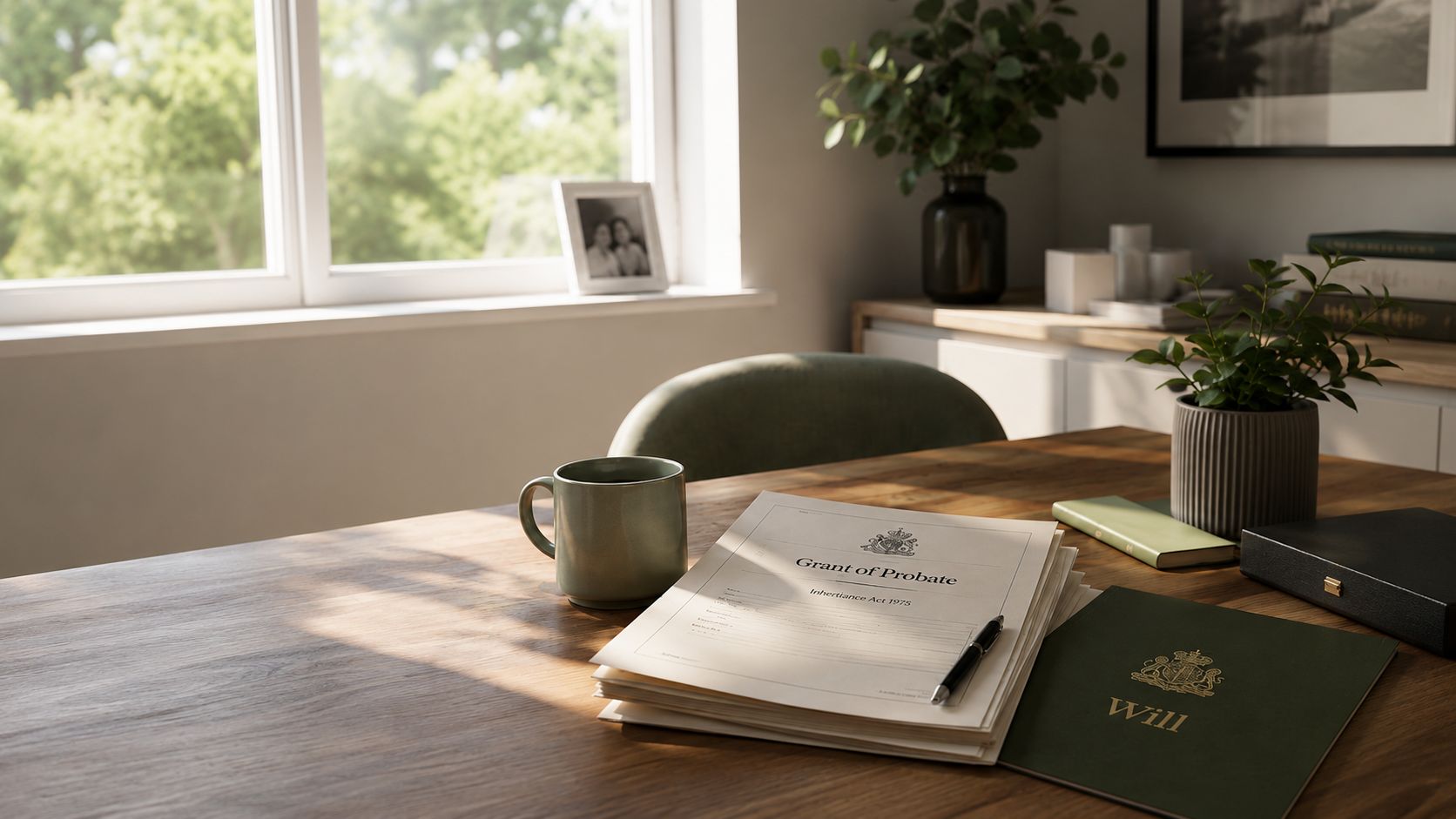
Probate made simple, handled with care.
We connect you with trusted probate specialists who take the stress out of a difficult time.
Rather talk it through first? Call 07739 065712, Mon–Sat, 8am–6pm.
Handled the way you would do it yourself, if you had the time.
- Keepsakes set aside before anything movesPhotographs, letters, medals and anything the family names are boxed first, never fished out of a skip afterwards.
- The estate stays protectedResale value is declared as a line on the quote, and every firm’s waste licence is checked, so liability never lands on you.
- Your pace, and distance is fineAround a third of probate clearances are managed from far away: video walk-throughs, photographs as each room finishes, paperwork by email.
- A person answers the phoneMon to Sat, 8am to 6pm. No script, no sales pressure, and if we cannot help we say so and point you somewhere that can.
Dad’s house had forty years of life in it. The firm ClearSorted matched us with set aside every photo album without being asked. It felt like being helped, not processed.
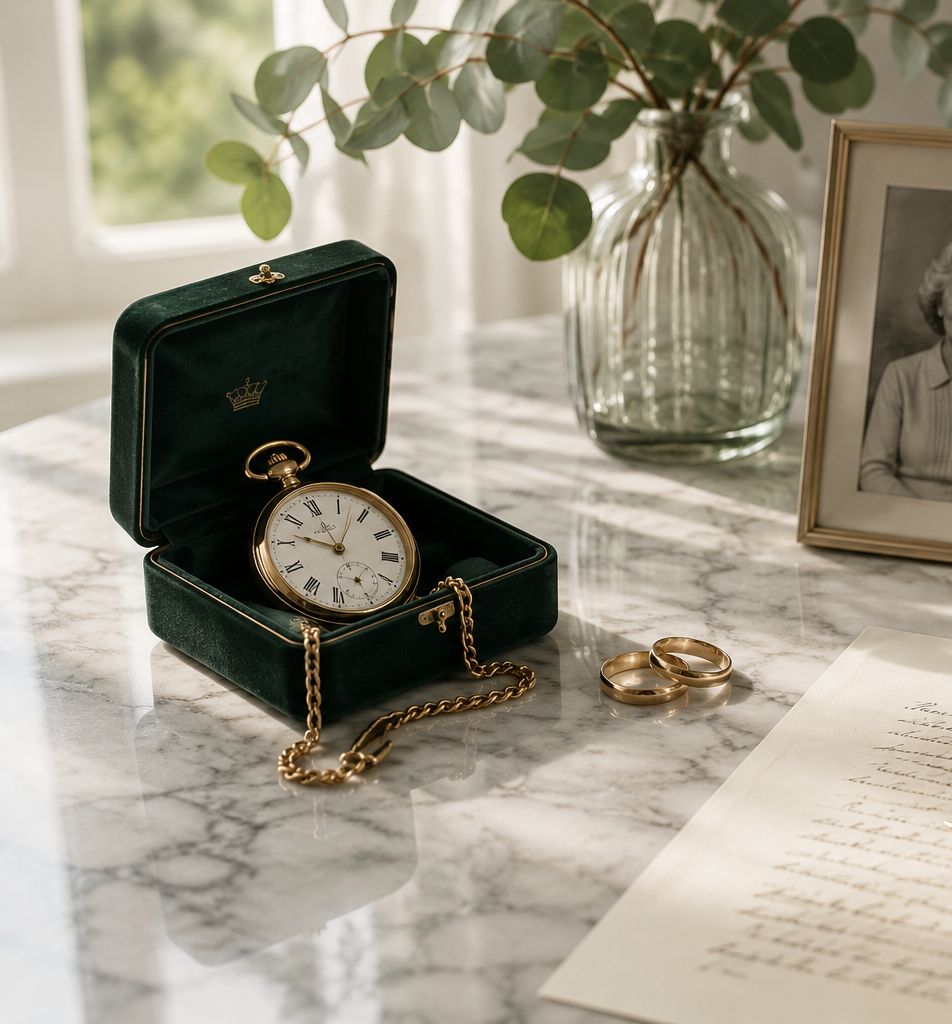
Probate is the legal process of dealing with someone’s estate when they pass away.
It gives you the legal authority to manage their property, pay any debts and distribute what’s left to the right people.
- Required when someone owns property or assets
- Overseen by the Probate Registry
- Can be complex, time-consuming and emotional
Common probate challenges
How it works
Describe the estate once. Up to three vetted probate specialists price it, and we chase everything else.
-
1
Tell us about the estate
Answer a few simple questions
about the property and situation. -
2
Receive up to 3 quotes
We match you with local probate
specialists, usually within a day. -
3
Choose your specialist
Compare prices, dates and reviews,
and take as long as you need.
In their own words
From families we matched during difficult weeks.
“The whole process was so much easier than I expected. I had three quotes within hours and found the right specialist straight away.”
“Professional, kind and explained everything clearly. I felt supported and in safe hands throughout.”
“A brilliant service at a difficult time. Saved me hours of searching and removed so much stress.”
“Quick, simple and completely transparent. Would recommend to anyone dealing with probate.”
Guide last reviewed July 2026 · checked against gov.uk and Environment Agency guidance
How a probate clearance actually runs
Almost every problem comes from doing step five before step two.
- 1Secure the house, and tell the insurer
Locks, post, heating left on enough to stop pipes freezing. Then ring the insurer: most home policies restrict or void cover once a property has been unoccupied for 30 to 60 days, and it is the executor who carries that. It is usually a phone call and an endorsement, not a new policy.
- 2Find the paperwork before it gets boxed
Will, deeds, share certificates, premium bonds, pension and insurance correspondence, recent bank post. This is the single most common thing lost in a clearance, and it is lost in the first hour, not the last.
- 3Photograph every room before anything moves
Including inside wardrobes, the loft, the garage and the shed. It takes twenty minutes on a phone. It is your evidence of what was there, it settles family disagreements before they start, and HMRC accepts it as a record.
- 4Let the family name what they want kept
In writing, then labelled in the house. Verbal claims made across a kitchen table three weeks earlier are how families fall out permanently.
- 5Get anything potentially valuable looked at
Not the kettle. Jewellery, watches, art, antiques, militaria, ceramics, tools, anything you would hesitate to price. A written valuation is what protects you personally if the figure is ever questioned.
- 6Only then book the clearance
With a firm whose waste carrier registration you have checked yourself. By this point the house holds nothing you cannot account for, so the clearance is simply the last mechanical step rather than the risky one.
Waiting is rarely as long as people fear, and a stopped application is the case for getting the paperwork right first time.
“You should not make any financial plans or put property on the market until you’ve got probate.”
HMCTS family court statistics, January to March 2026
What a probate firm does that a rubbish removal firm does not
The things we check before a firm is allowed to quote you.
A room-by-room record, photographed, handed to the estate.
Keepsakes and anything paper are boxed and handed to you, never found in a skip afterwards.
Contents belong to the estate, not to the firm clearing it. A probate firm shows the resale offset as a line in the quote.
Direction taken and paperwork copied, without being chased.
Financial and medical records shredded, with a certificate if you want one.
Video walk-through, photographs as each room finishes, paperwork by email.
A transfer note and a receipt showing the firm’s registration number. Keeping that, and the number itself, is how you evidence that you took reasonable measures if the waste is ever traced back to the property.
Swept through, broom-clean, ready for vacant possession.
What HMRC actually expects, and what it does not
For inheritance tax the contents are declared at open market value on the date of death: what they would have fetched that day between a willing buyer and a willing seller. Not the insurance figure, and not what they cost.
- Most homes come to a modest figureHMRC does not require a professional valuation for ordinary household goods. An honest, reasonable estimate from what things fetch at auction is enough; nobody is itemising a cutlery drawer.
- £1,500 is the sensible lineAnything you think could be worth more than that, or are simply unsure about, gets a professional valuation in writing. Jewellery, art, watches, cars and period furniture are the usual candidates.
- The executor carries the accountabilityYou are personally accountable for the account being right, which is why the photographs and inventory happen before anything moves.
The two-minute check that transfers the risk off you
Any firm taking away someone else’s waste needs an upper-tier waste carrier registration with the Environment Agency. The number starts CBDU, the register is public, and it is free to search.
- No CBDU number, no conversationIf a firm will not give you its registration number, that is the end of it. The good ones volunteer it.
- The fine lands on you, not themIf dumped waste is traced back and you cannot show you checked, councils issue fixed penalties of £150 to £600, and prosecution carries an unlimited fine.
- The two-minute fixNote the CBDU number, search the public register, keep the receipt. Every firm here is checked before it can quote you; re-check any of them yourself, we would rather you did.
Clearing the house, in the right order
Nine steps. The expensive mistakes happen when the clearance is booked before the photographs and the valuation are done.
- Secure the property and tell the insurer it is unoccupied
- Find the will, deeds, policies, share certificates and recent post
- Photograph every room, including wardrobes, loft and garage
- Ask the family to name what they want kept, then label it
- Get anything potentially valuable looked at, in writing
- Cancel utilities, redirect post, take meter readings
- Search the firm’s CBDU number on the Environment Agency register yourself
- Book the clearance, with the resale offset written into the quote
- Keep the receipt, the CBDU number and any donation receipts
Probate & estate clearance near you
Every area page carries local prices, council bulky-waste costs and the nearest recycling centres.
London113 areas
Berkshire & Buckinghamshire21 areas
Essex26 areas
Kent17 areas
Hertfordshire12 areas
Surrey15 areas
Common questions
Who pays for a probate clearance?
What if something valuable turns up after the house is cleared?
We live hours away. Can this be done without us there?
The house was hoarded. Is that a different job?
Can we be there while it happens?
How much does probate & estate clearance cost in London?
Can we clear the house before probate is granted?
How quickly can it be done?
Is ClearSorted free to use?
Do you cover the whole of London?
Get probate & estate clearance quotes
Tell us about the property once. Up to three vetted firms reply.
Free · no obligation · your job goes to at most three vetted firms, never a list